https://sputnikglobe.com/20220711/deepest-view-of-the-universe-nasa-reveals-first-image-from-new-space-telescope--1097205970.html
'Deepest View of the Universe': NASA Reveals First Full Color Image From James Webb Space Telescope
'Deepest View of the Universe': NASA Reveals First Full Color Image From James Webb Space Telescope
Sputnik International
The James Webb Space Telescope (JWST)--humanity's largest and most complex space science observatory--is set to release a suite of full color images and data... 11.07.2022, Sputnik International
2022-07-11T22:30+0000
2022-07-11T22:30+0000
2023-04-12T16:58+0000
nasa
james webb space telescope (jwst)
canadian space agency (csa)
european space agency (esa)
infrared camera
space
https://cdn1.img.sputnikglobe.com/img/07e6/01/04/1092025504_0:91:744:510_1920x0_80_0_0_dab27cd7b746f1d40475c2dc24d4b99d.png
The "deepest and sharpest infrared image of the distant universe to date" was unveiled at the White House on Monday, several hours ahead of NASA's live TV broadcast on the matter. The historic image shows Webb's 'First Deep Field,' also known as galaxy cluster SMACS 0723. The light seen in the image had been traveling for over 13 billion years, noted NASA Administrator Bill Nelson. The deep field is a composite image captured by the spacecraft's Near-Infrared Camera (NIRCam), which compiles images at different wavelengths, resulting in "depths at infrared wavelengths beyond the Hubble Space Telescope’s deepest fields," according to NASA. Furthermore, the JWST took approximately 12.5 hours to compile the image, versus a weekslong wait period for the Hubble Space Telescope to compile a similar composite. The Hubble, optimized for shorter ultraviolet and visible wavelengths of light, can observe in near-infrared light and achieves its depth of field with two main curved optics, while the JWST uses deeper infrared vision and is equipped with a three-mirror design that provides a much wider field. It is worth noting that the Hubble will remain in operation alongside the JWST for some time, and may even conduct concurrent joint observations. The $10 billion JWST was developed via a partnership between NASA, the European Space Agency, and the Canadian Space Agency. Launched from Earth on December 25, 2021, the space science observatory is presently orbiting some 1 million miles away and can be used to detect objects not visible to the human eye. Scientists intend to use the JWST to probe for signs of life on other planets and study how the first stars and galaxies formed after the Big Bang. Future endeavors will compare modern galaxies to systems of the past.
https://sputnikglobe.com/20220511/webb-space-telescopes-optical-alignment-deemed-perfect-by-nasa-after-capturing-stunning-test-pics-1095417855.html
Sputnik International
feedback@sputniknews.com
+74956456601
MIA „Rossiya Segodnya“
2022
News
en_EN
Sputnik International
feedback@sputniknews.com
+74956456601
MIA „Rossiya Segodnya“
Sputnik International
feedback@sputniknews.com
+74956456601
MIA „Rossiya Segodnya“
nasa, james webb space telescope (jwst), canadian space agency (csa), european space agency (esa), infrared camera, space
nasa, james webb space telescope (jwst), canadian space agency (csa), european space agency (esa), infrared camera, space
'Deepest View of the Universe': NASA Reveals First Full Color Image From James Webb Space Telescope
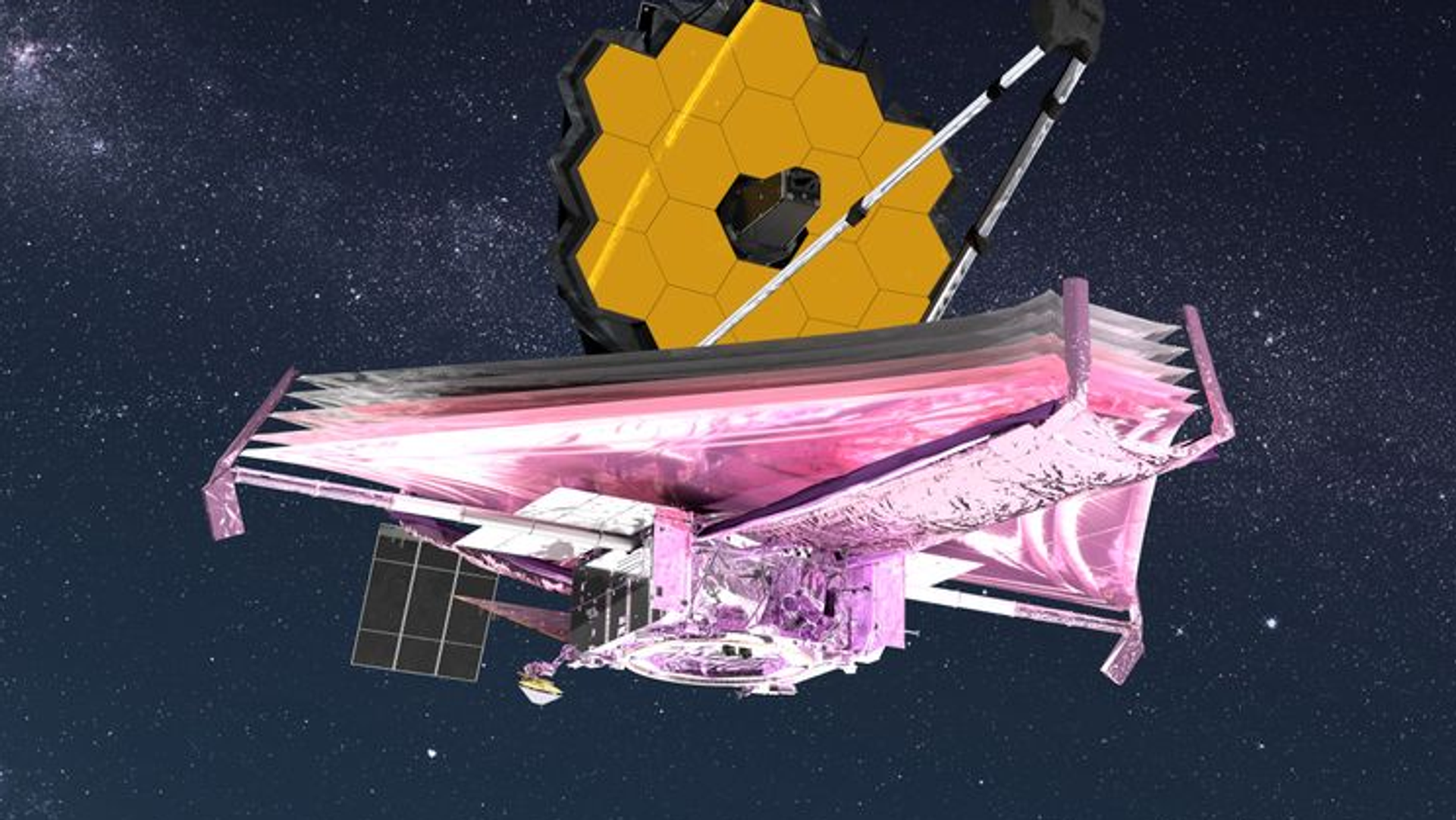
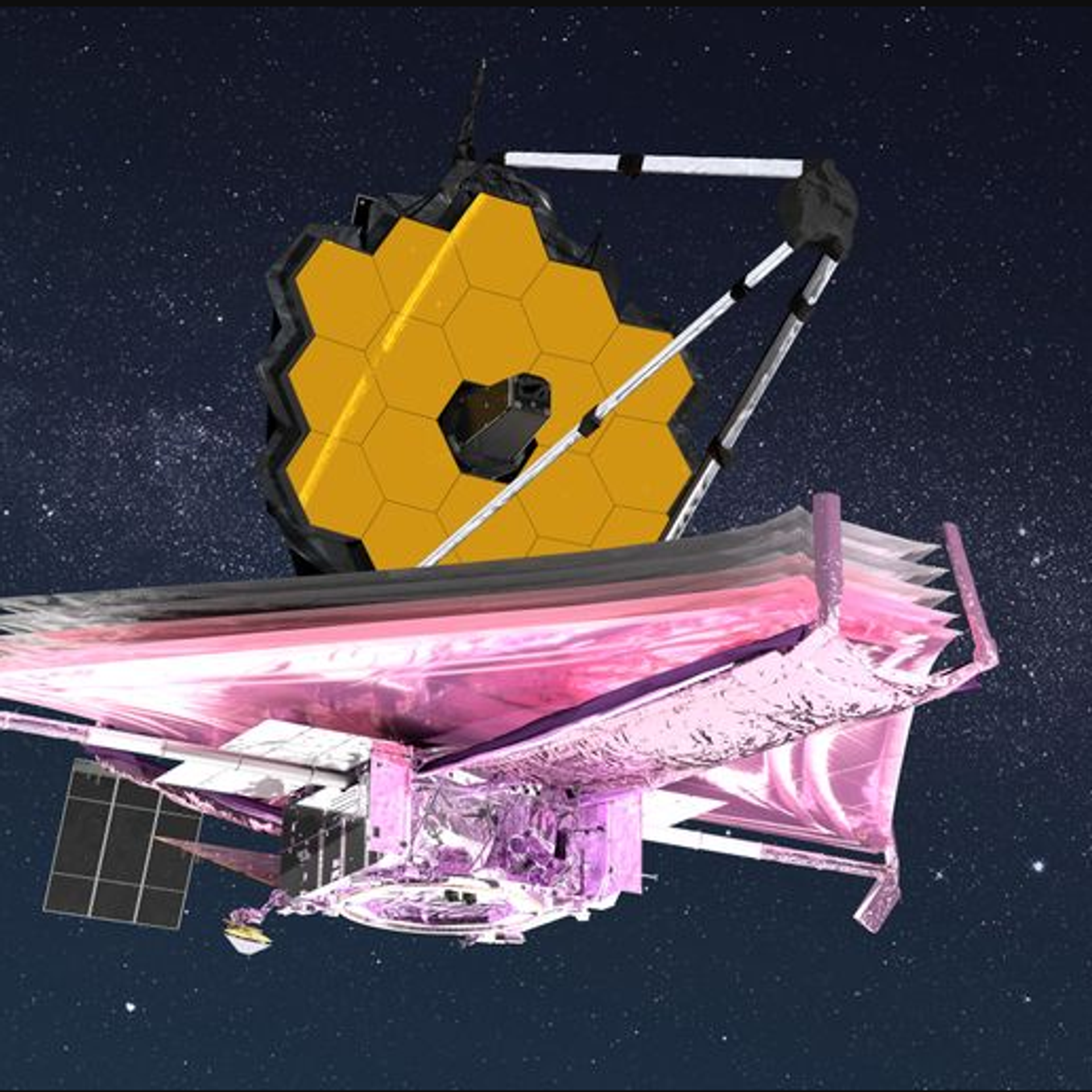
22:30 GMT 11.07.2022 (Updated: 16:58 GMT 12.04.2023) The James Webb Space Telescope (JWST)--humanity's largest and most complex space science observatory--is set to release a suite of full color images and data on Tuesday, July 12, at 10:30 a.m. Eastern Time.
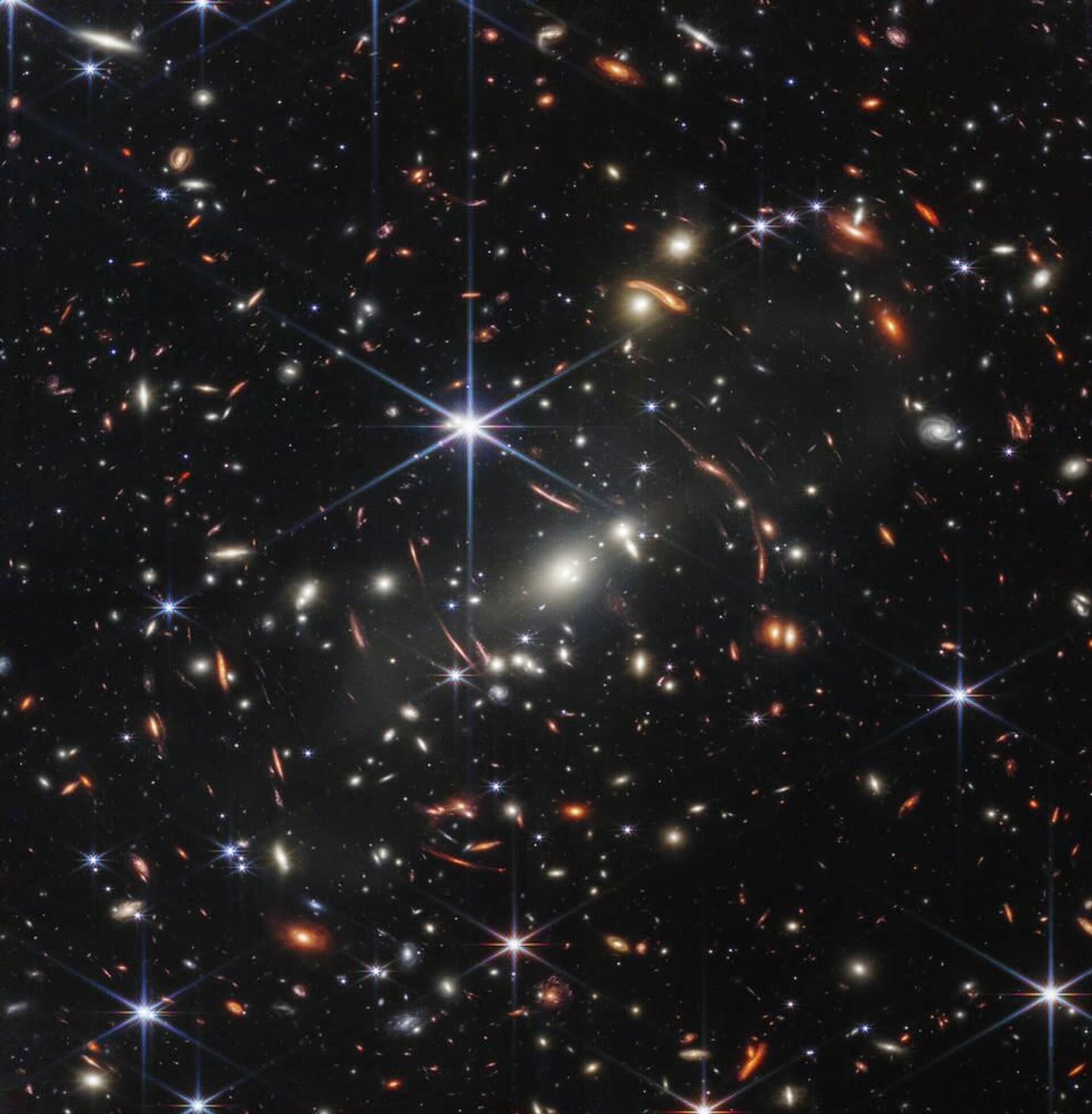
The "deepest and sharpest infrared image of the distant universe to date" was unveiled at the White House on Monday, several hours ahead of NASA's live TV broadcast on the matter.
The historic image shows Webb's 'First Deep Field,' also known as galaxy cluster SMACS 0723.
The light seen in the image had been traveling for over 13 billion years, noted NASA Administrator Bill Nelson.
"Today is a historic day," US President Joe Biden said during a Monday news conference alongside Vice President Kamala Harris and NASA officials. "It’s a new window into the history of our universe and today we’re going to get a first glimpse of the light to shine through that window."
The deep field is a composite image captured by the spacecraft's Near-Infrared Camera (NIRCam), which compiles images at different wavelengths, resulting in
"depths at infrared wavelengths beyond the Hubble Space Telescope’s deepest fields," according to NASA. Furthermore, the JWST took approximately 12.5 hours to compile the image, versus a weekslong wait period for the Hubble Space Telescope to compile a similar composite.
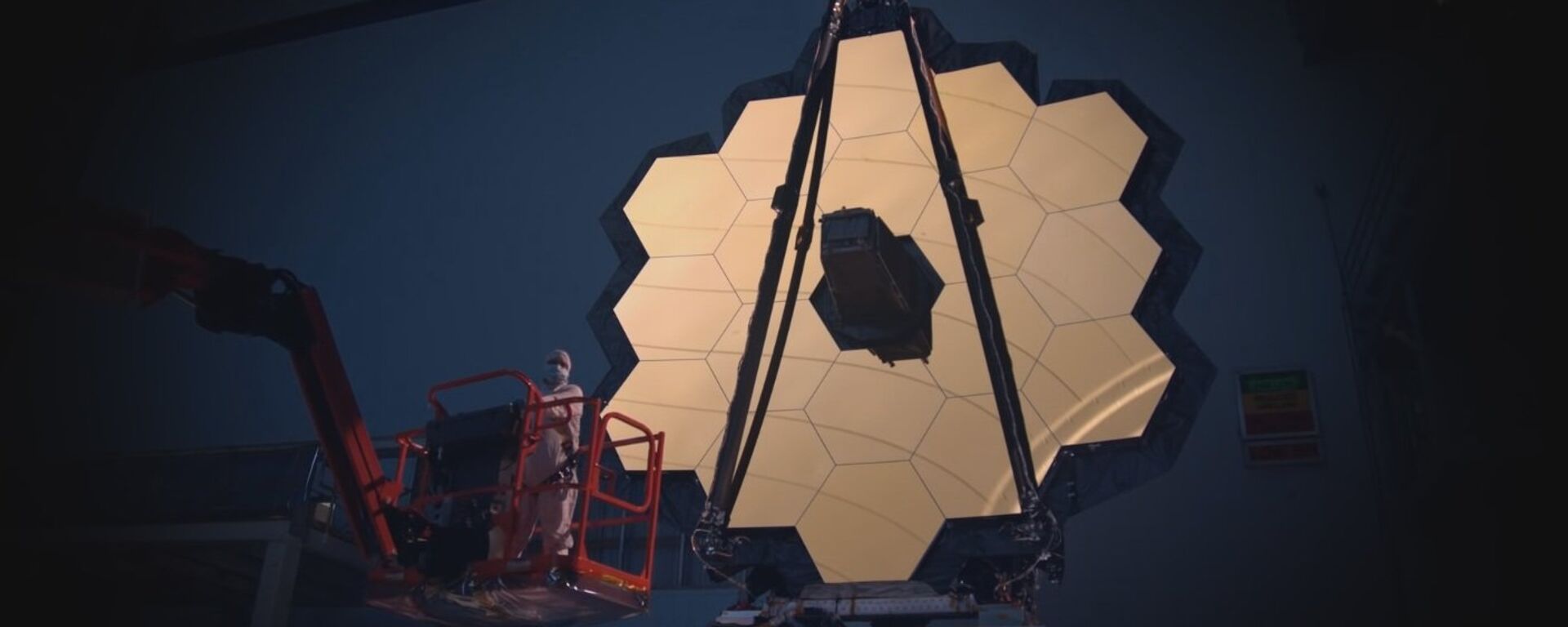
The Hubble, optimized for shorter ultraviolet and visible wavelengths of light, can observe in near-infrared light and achieves its depth of field with two main curved optics, while the JWST uses deeper infrared vision and is equipped with a three-mirror design that provides a much wider field. It is worth noting that the Hubble will remain in operation alongside the JWST for some time, and may even conduct concurrent joint observations.
The $10 billion JWST was developed via a partnership between NASA, the European Space Agency, and the Canadian Space Agency.
Launched from Earth on December 25, 2021, the space science observatory is presently orbiting some 1 million miles away and can be used to detect objects not visible to the human eye.
Scientists intend to use the JWST to probe for signs of life on other planets and study how the first stars and galaxies formed after the Big Bang. Future endeavors will compare modern galaxies to systems of the past.