https://sputnikglobe.com/20210826/worlds-first-space-junk-cleaner-satellite-successfully-picks-up-orbital-debris-1083716897.html
World's First Space Junk Cleaner Satellite Successfully Picks Up Orbital Debris
World's First Space Junk Cleaner Satellite Successfully Picks Up Orbital Debris
Sputnik International
According to the Union of Concerned Scientists' database, there are more than 3,300 functioning satellites in orbit and thousands of pieces of junk that can be... 26.08.2021, Sputnik International
2021-08-26T15:25+0000
2021-08-26T15:25+0000
2023-04-12T16:57+0000
newsfeed
world
satellite
space debris
foreign object debris (fod)
solar system
space
https://cdn1.img.sputnikglobe.com/img/103726/25/1037262558_0:34:1023:609_1920x0_80_0_0_b5686f1bcca8f726de829641a7ee61c3.jpg
In a major development that may ease concerns that dead satellites are being left to litter space, Japan's private firm Astroscale claimed that its demonstrator satellite ELSA-d has successfully captured a defunct satellite on Wednesday.The ELSA-d, which stands for End-of-Life Services by Astroscale-demonstration, is the world's first space junk cleaner satellite, designed to find and retrieve used satellites and other debris orbiting Earth. It was launched from Kazakhstan on a Soyuz 2.1a rocket by Russia's GK Launch Services along with 37 other payloads.“It was a first step, but for us, it was big. The test was brief, with the client moving only centimetres away before the servicer fired its thrusters and reconnected with the client. The entire test lasted dozens of seconds. We were able to test out the cameras, the visualisation, the software and, most importantly, the capture mechanism,” Chris Blackerby, chief operating officer of Astroscale, said in an interview during the 36th Space Symposium in Colorado, US.After the successful demonstration, ELSA-d will undergo several other tests that include attempting to capture an uncontrolled, tumbling space object. The final capture demonstration will be “diagnosis and client search,” in which the 175kg servicer satellite (meant to remove debris) will inspect the 17kg client satellite (defunct satellite serving as debris), withdraw to simulate a far-range search, then approach and recapture the client.The company is also working with the Japanese space agency JAXA on other missions. During the Symposium, Blackerby said that Astroscale will soon start working on a next-generation version of its ELSA spacecraft, called ELSA-m and it will be able to capture multiple pieces of debris.Signal acquisition of our #ELSAd servicer and client satellites confirmed! 📡 Congrats to the entire team and thank you to all our partners and fellow Space Sweepers around the world for getting us this far. #GoELSAd pic.twitter.com/vmxRmpSQ6gAs space is becoming increasingly crowded, the rising level of debris in Earth's orbit has become a reason for concern. The amount of orbital debris has increased exponentially over the past 60 years and - according to a report published by NASA in January this year - millions of pieces of orbital debris now exist in low Earth orbit."At least 26,000 the size of a softball or larger that could destroy a satellite on impact; over 500,000 the size of a marble big enough to cause damage to spacecraft or satellites; and over 100 million the size of a grain of salt that could puncture a spacesuit," the report said.
Sputnik International
feedback@sputniknews.com
+74956456601
MIA „Rossiya Segodnya“
2021
Sushmita Panda
https://cdn1.img.sputnikglobe.com/img/07e5/05/12/1082926186_0:0:2048:2048_100x100_80_0_0_4474d0d7e27a36878eb8727832be74b4.jpg
Sushmita Panda
https://cdn1.img.sputnikglobe.com/img/07e5/05/12/1082926186_0:0:2048:2048_100x100_80_0_0_4474d0d7e27a36878eb8727832be74b4.jpg
News
en_EN
Sputnik International
feedback@sputniknews.com
+74956456601
MIA „Rossiya Segodnya“
Sputnik International
feedback@sputniknews.com
+74956456601
MIA „Rossiya Segodnya“
Sushmita Panda
https://cdn1.img.sputnikglobe.com/img/07e5/05/12/1082926186_0:0:2048:2048_100x100_80_0_0_4474d0d7e27a36878eb8727832be74b4.jpg
newsfeed, satellite, space debris, foreign object debris (fod), solar system, space
newsfeed, satellite, space debris, foreign object debris (fod), solar system, space
World's First Space Junk Cleaner Satellite Successfully Picks Up Orbital Debris
15:25 GMT 26.08.2021 (Updated: 16:57 GMT 12.04.2023) According to the Union of Concerned Scientists' database, there are more than 3,300 functioning satellites in orbit and thousands of pieces of junk that can be traced, including discarded boosters, derelict satellites, and pieces that have fallen off of vessels.
In a major development that may ease concerns that dead satellites are being left to litter space, Japan's private firm Astroscale claimed that its demonstrator satellite ELSA-d has successfully captured a defunct satellite on Wednesday.
"A major challenge of debris removal, and on-orbit servicing in general, is docking with or capturing a client object; this test demonstration served as a successful validation of ELSA-d’s ability to dock with a client, such as a defunct satellite," the firm, which launched the first commercial space junk clean-up mission in March this year, said on Thursday.
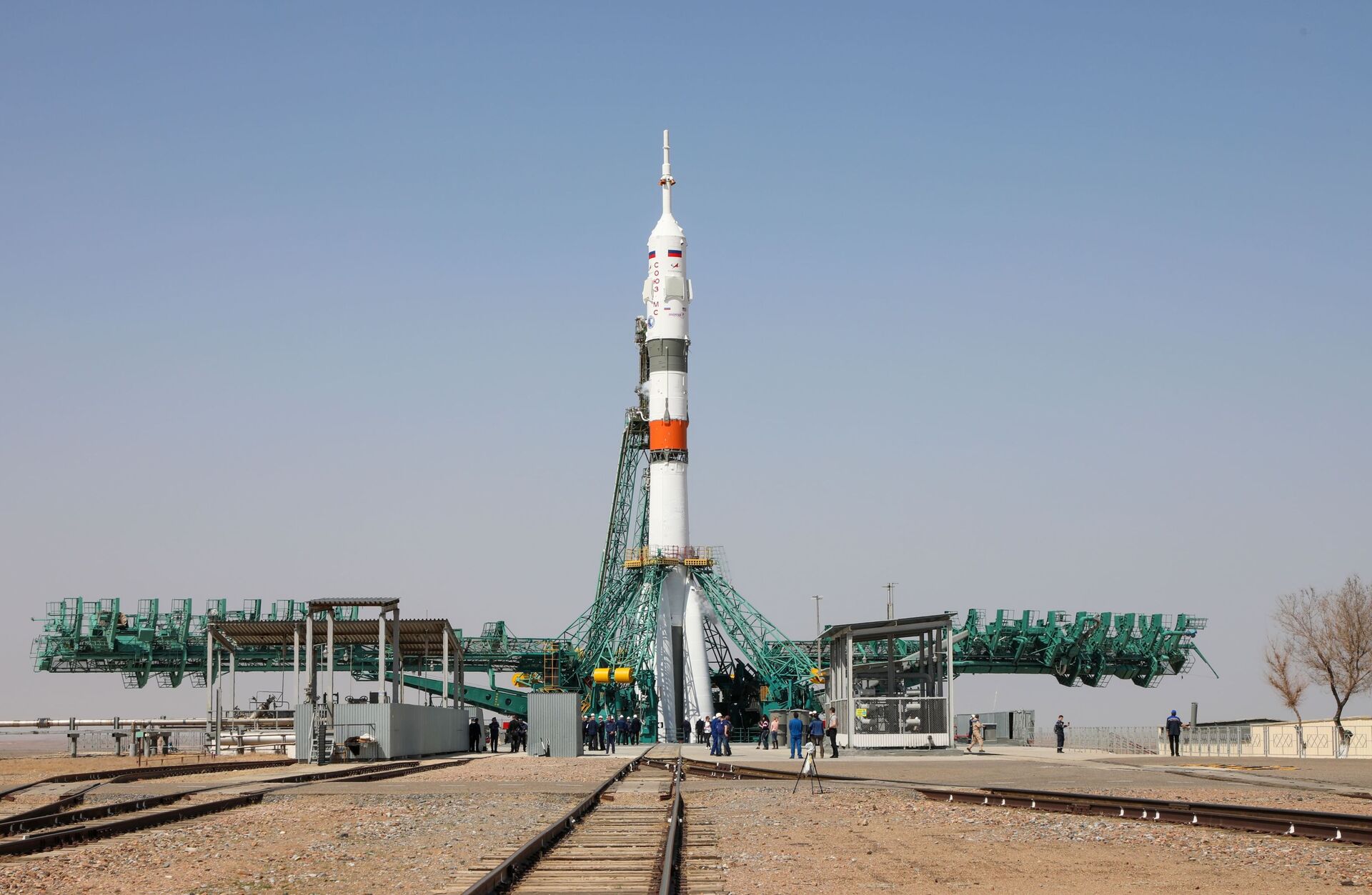
The ELSA-d, which stands for End-of-Life Services by Astroscale-demonstration, is the world's first space junk cleaner satellite, designed to find and retrieve used satellites and other debris orbiting Earth. It was launched from Kazakhstan on a Soyuz 2.1a rocket by Russia's GK Launch Services along with 37 other payloads.
“It was a first step, but for us, it was big. The test was brief, with the client moving only centimetres away before the servicer fired its thrusters and reconnected with the client. The entire test lasted dozens of seconds. We were able to test out the cameras, the visualisation, the software and, most importantly, the capture mechanism,” Chris Blackerby, chief operating officer of Astroscale, said in an interview during the 36th Space Symposium in Colorado, US.
After the successful demonstration, ELSA-d will undergo several other tests that include attempting to capture an uncontrolled, tumbling space object. The final capture demonstration will be “diagnosis and client search,” in which the 175kg servicer satellite (meant to remove debris) will inspect the 17kg client satellite (defunct satellite serving as debris), withdraw to simulate a far-range search, then approach and recapture the client.
The company is also working with the Japanese space agency JAXA on other missions. During the Symposium, Blackerby said that Astroscale will soon start working on a next-generation version of its ELSA spacecraft, called ELSA-m and it will be able to capture multiple pieces of debris.
Signal acquisition of our
#ELSAd servicer and client satellites confirmed! 📡 Congrats to the entire team and thank you to all our partners and fellow Space Sweepers around the world for getting us this far.
#GoELSAd pic.twitter.com/vmxRmpSQ6gAs space is becoming increasingly crowded, the rising level of debris in Earth's orbit has become a
reason for concern. The amount of orbital debris has increased exponentially over the past 60 years and - according to a report published by NASA in January this year - millions of pieces of orbital debris now exist in low Earth orbit.
"At least 26,000 the size of a softball or larger that could destroy a satellite on impact; over 500,000 the size of a marble big enough to cause damage to spacecraft or satellites; and over 100 million the size of a grain of salt that could puncture a spacesuit,"
the report said.